

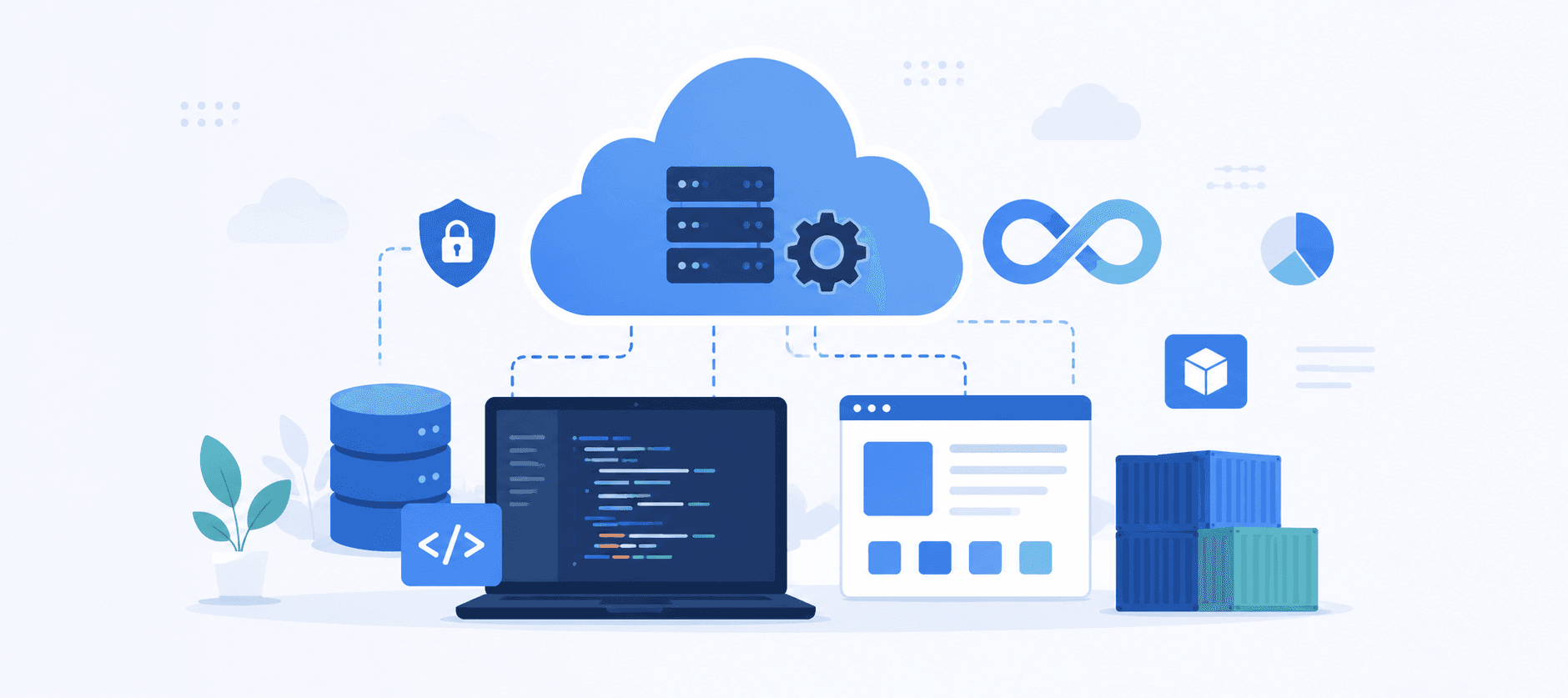
Environment as a Service (EaaS) is a cloud-native approach that provides on-demand, fully-configured development, testing, staging, and production environments through automated provisioning. Instead of manually setting up servers, databases, and infrastructure, teams can spin up complete, isolated environments with a single command.
Top 5 Benefits of EaaS
- Accelerated Time-to-Market: Environment setup time reduces from days to minutes. Developers can provision complete environments instantly, enabling faster iteration cycles and quicker feature releases.
- Cost Optimization: Pay only for what you use, when you use it. EaaS eliminates idle infrastructure, reducing costs by 60–80% through on-demand provisioning and automated teardown.
- Enhanced Developer Productivity: Developers spend less time on infrastructure configuration and more time building features. Pre-configured environments matching production eliminate “works on my machine” issues.
- Improved Consistency & Reliability: All environments (dev, staging, production) are identical in configuration. This consistency reduces bugs, simplifies debugging, and increases deployment confidence.
- Better Security & Scalability: Built-in security best practices, automated scanning, and isolated environments reduce attack surfaces. Auto-scaling handles peak loads without manual intervention.
Real-World Applications
- Microservices Architecture: Spin up complete service ecosystems with all dependencies configured automatically.
- CI/CD Pipelines: Each pipeline run gets a fresh, isolated environment, ensuring test reliability.
- Feature Branch Development: Create dedicated environments for each feature branch, enabling parallel development without conflicts.
Key Implementation Tips
- Start Simple: Begin with a well-documented template and gradually add complexity.
- Automate Everything: Use Infrastructure as Code (IaC) tools like Terraform.
- Monitor Cost: Set up automated teardown policies for unused environments.
- Integrate with CI/CD: Trigger environment creation/destruction based on events.
The Bottom Line
EaaS represents a paradigm shift in infrastructure management. By abstracting away complexity, teams can focus on building great software while reducing costs, improving productivity, and enhancing reliability.
Organizations that embrace EaaS today will be better positioned to compete in a fast-paced market where speed, reliability, and cost efficiency are critical.
Connect with us
If you’d like help designing an Environment as a Service workflow for your stack, reach out from our Contact section.